App Design as a Commodity
An installation that sells custom apps for Venmo change. A receipt printer takes your order, an AI agent builds and hosts the app, and the receipt carries the QR code.
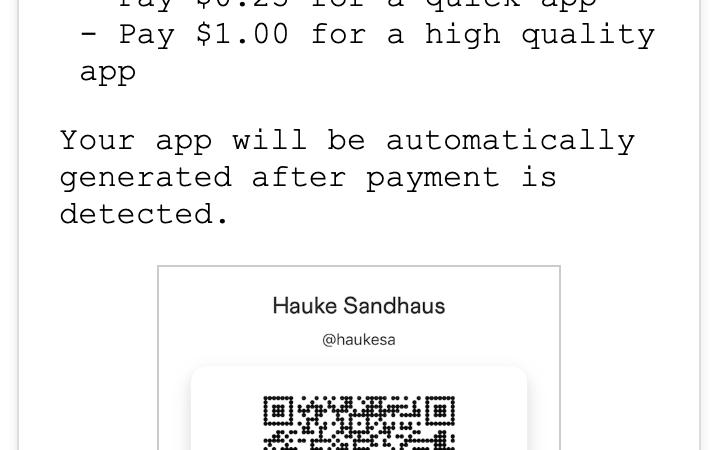
A thermal receipt printer sits on a table next to a Venmo QR code. You scan it, send 25 cents or a dollar, and write in the payment note what app you want. A few minutes later the printer hums and hands you a receipt with a QR code. Behind it is your app: generated, pushed to a GitHub repository, and hosted on the web.
The amount you pay sets the budget. A quarter buys a quick build; a dollar buys a stronger model and more effort. A Flask backend watches the Venmo confirmation emails, hands the description to a coding agent, deploys the result to a public GitHub account, and prints the receipt with the transaction details, the link, and the system log of the build. All generated apps stay public at github.com/sandvibe.
The piece asks what you are buying when software costs less than a coffee and takes less time to make than drinking one. The receipt is the only physical trace of a process that is otherwise invisible. The project received a Backslash microgrant from Cornell Tech’s art and technology program and was shown on May 6, 2025.