Standard UX questionnaires measure whether a product is pragmatic and hedonic. They say nothing about whether it is honest. Doris Maria Rhomberg and I built the User Experienced Ethics Questionnaire (UEEQ) to close that gap. It is an addendum to the short User Experience Questionnaire (UEQ-S) with five extra scales: Deception, Addictiveness, Coercion, Disguise, and Annoyance. Items are bipolar adjective pairs, for example benevolent versus deceptive and suggesting versus pressuring, presented in randomized order and direction.
The scales came out of a survey in which 126 social media users rated mockups of fifteen dark patterns (Rhomberg* & Sandhaus*, 2024). Perceived deception tracked negative aesthetic judgment closely, which is the finding behind the journal article (Sandhaus & Rhomberg, 2026). A follow-up experiment with 141 UX professionals showed that putting these items on an evaluation dashboard nearly doubled the rate at which designers rejected manipulative interfaces (Sandhaus et al., 2026).
ueeq.org hosts the questionnaire in English and German, the citation we ask for, and a link to the OSF repository with the dark pattern mockups. Scoring and analysis tools are still in development, so for now UEEQ is a research instrument rather than a finished product.
References
2026
ZfP
Deception Is Ugly – Linking Aesthetic Judgment to Perceived Manipulation in Dark Patterns
Dark patterns are manipulative interface designs that exploit cognitive biases. We surveyed 126 social media users who evaluated mockups of 15 dark patterns across six strategic categories, using an adapted User Experience Questionnaire with four autonomy-focused items (pressuring, addictive, covert, deceptive). Deception co-occurred strongly with negative aesthetic judgments (r = 0.93): users rated deceptive interfaces as unattractive, whereas pressure, addictiveness, and covertness showed weaker associations. Within strategic categories, Interface Interference (r = 0.77) and Social Engineering (r = 0.72) items cohered, indicating that several categories from existing taxonomies correspond to coherent user experiences. These exploratory results are consistent with users holding tacit awareness that becomes articulable when vocabulary is provided, with the four autonomy items functioning as distinct perceptual dimensions. They point to ethics-focused UX measurement scales as a direction for capturing unethical influence alongside pragmatic and hedonic constructs.
@article{Sandhaus2026-deception,title={Deception Is Ugly – Linking Aesthetic Judgment to Perceived Manipulation in Dark Patterns},author={Sandhaus, Hauke and Rhomberg, Doris Maria},year={2026},month=nov,journal={Zeitschrift für Psychologie},publisher={Hogrefe Publishing},volume={234},number={4},pages={232--242},doi={10.1027/2151-2604/a000635},url={https://doi.org/10.1027/2151-2604/a000635},issn={2151-2604},language={en},psyarxiv={https://doi.org/10.31234/osf.io/bhfrz_v2},thread={ethical-design},mentees={doris-rhomberg},pubtype={journal},}
TLDR: Across 126 social media users, perceived deception co-occurs strongly with negative aesthetic judgments of dark patterns (r = 0.93), pointing toward ethics-focused UX measurement scales.
CHIWORK LBW
Making Indecent Persuasion Visible: How Evaluation Metrics Shape UX Designers’ Ethical Reasoning
Hauke Sandhaus, Doris Maria Rhomberg, and Helen Nissenbaum
In CHIWORK ’26: Proceedings of the 5th Annual Symposium on Human-Computer Interaction for Work (Late-Breaking Work), Linz, Austria, Jun 2026
Best Late-Breaking Work Award at CHIWORK ’26 (1 of 25)
UX evaluation tools are widely treated as neutral measurement instruments, yet the metrics designers see during evaluation may determine what they can recognise as ethically problematic. In a three-condition experiment, 141 UX professionals evaluated social media interfaces containing dark patterns. When dashboards included persuasion-focused items alongside standard User Experience Questionnaire (UEQ) data, designers rejected manipulative interfaces at nearly double the rate of a no-data baseline (56.2% vs. 30.0%). Standard UEQ data alone already produced a significant intermediate shift (43.9% rejection), so any user-testing signal recalibrates judgement. Decision confidence stayed uniformly high across conditions: designers without evaluation data were not cautiously uncertain but confidently uncalibrated, reaching different conclusions than they would have with user data while feeling equally sure. Analysis of 1,313 written justifications showed that persuasion-focused data shifted reasoning from business and aesthetic framings toward explicit engagement with manipulation, user trust, and autonomy. We introduce indecent persuasion, behavioural influence that users experience as pressuring, addictive, covert, or deceptive, as a dimension of user experience that standard instruments fail to surface. The findings raise a question about evaluation infrastructure: who decides which dimensions of user experience count?
@inproceedings{Sandhaus2026-indecent,title={Making Indecent Persuasion Visible: How Evaluation Metrics Shape UX Designers' Ethical Reasoning},author={Sandhaus, Hauke and Rhomberg, Doris Maria and Nissenbaum, Helen},year={2026},month=jun,booktitle={CHIWORK '26: Proceedings of the 5th Annual Symposium on Human-Computer Interaction for Work (Late-Breaking Work)},location={Linz, Austria},publisher={Association for Computing Machinery},address={New York, NY, USA},series={CHIWORK '26},doi={10.1145/3805029.3818279},url={https://doi.org/10.1145/3805029.3818279},keywords={UX metrics, dark patterns, indecent persuasion, ethical design, evaluation instruments, professional judgment},thread={ethical-design},mentees={doris-rhomberg},pubtype={short},}
TLDR: In a study of 141 UX professionals, persuasion-focused evaluation metrics nearly doubled rejection of manipulative interfaces, surfacing "indecent persuasion" as a dimension standard UX instruments fail to capture.
2024
CHI Workshop
Towards Quantifying Ethical User Experience: Evaluating User Perceptions of Dark Patterns in Social Media
Doris Maria Rhomberg*, and Hauke Sandhaus*
In Mobilizing Research and Regulatory Action on Dark Patterns and Deceptive Design Practices Workshop at the CHI Conference on Human Factors in Computing Systems, Honolulu, Hawaii, USA, May 2024
No standardized questionnaire currently incorporates an ethical dimension for assessing User Experience (UX). We explored how the ethicality of interface design is reflected in current UX metrics and how they could be extended. To this end, we adapted the User Experience Questionnaire (UEQ) and enriched it with supplementary items specifically designed to capture user responses on social media to unethical interface designs, commonly referred to as ’dark patterns’. Through an exploratory analysis of a survey involving 120 participants who evaluated a selection of 15 social media dark patterns, we found preliminary evidence that (1) an aggregated UX score using items from the User Experience Questionnaire does not effectively indicate unethical user interface design. Instead, (2) subscale measures from the questionnaire show a relationship with unethical design. Furthermore, extending the User Experience Questionnaire seems promising, as (3) users can identify interfaces with addictive and pressuring properties, and (4) evaluations demonstrate consistency within groups of unethical design strategies.
@inproceedings{rhomberg_towards_2024,title={Towards Quantifying Ethical User Experience: Evaluating User Perceptions of Dark Patterns in Social Media},author={Rhomberg, Doris Maria and Sandhaus, Hauke},year={2024},month=may,booktitle={Mobilizing Research and Regulatory Action on Dark Patterns and Deceptive Design Practices Workshop at the CHI Conference on Human Factors in Computing Systems},location={Honolulu, Hawaii, USA},language={en},mentees={doris-rhomberg},pubtype={workshop},note={* = equal contribution},}
TLDR: Only a modified User Experience Questionnaire can explicate unethical aspects of social media interfaces.
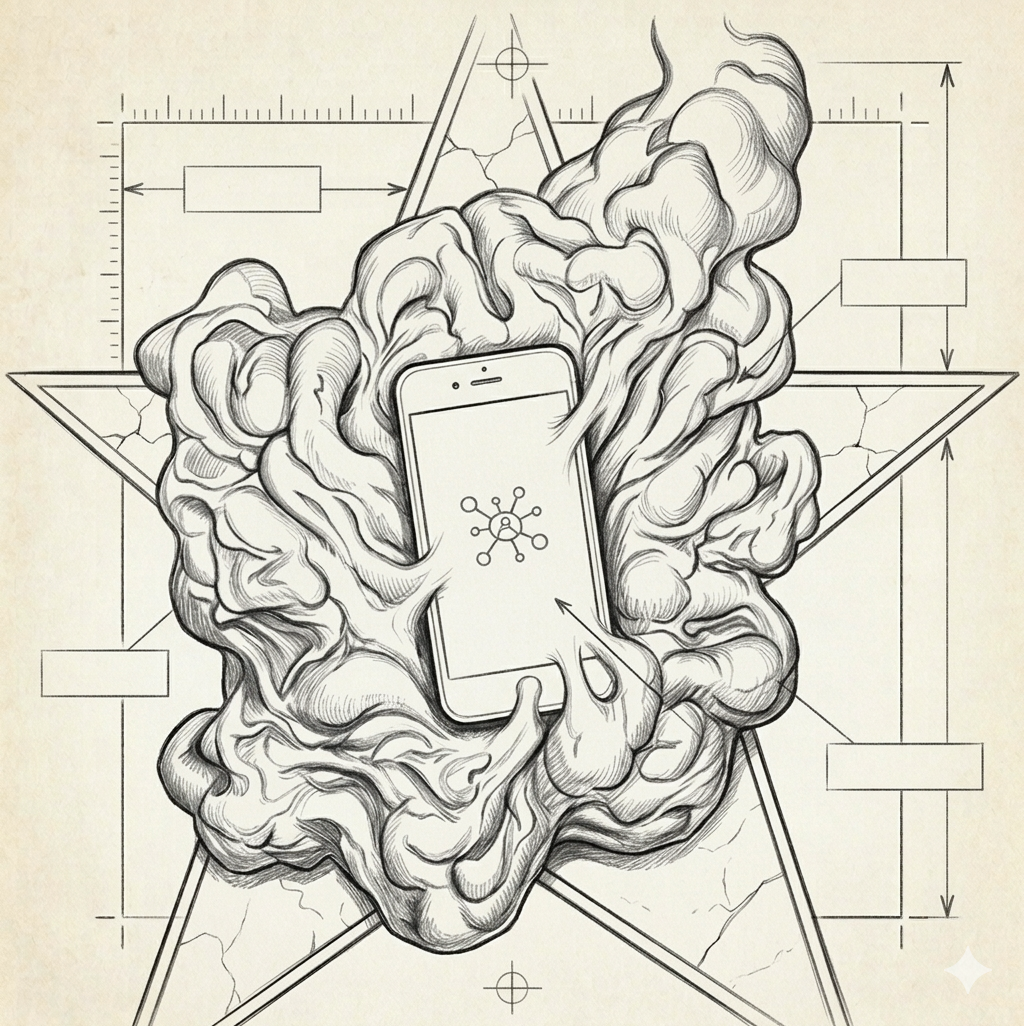 Deception Is Ugly – Linking Aesthetic Judgment to Perceived Manipulation in Dark PatternsZeitschrift für Psychologie, Nov 2026Abstract: Deception Is Ugly – Linking Aesthetic Judgment to Perceived Manipulation in Dark Patterns PsyArXiv: Deception Is Ugly – Linking Aesthetic Judgment to Perceived Manipulation in Dark Patterns BibTeX: Deception Is Ugly – Linking Aesthetic Judgment to Perceived Manipulation in Dark Patterns HTML: Deception Is Ugly – Linking Aesthetic Judgment to Perceived Manipulation in Dark PatternsTLDR: Across 126 social media users, perceived deception co-occurs strongly with negative aesthetic judgments of dark patterns (r = 0.93), pointing toward ethics-focused UX measurement scales.
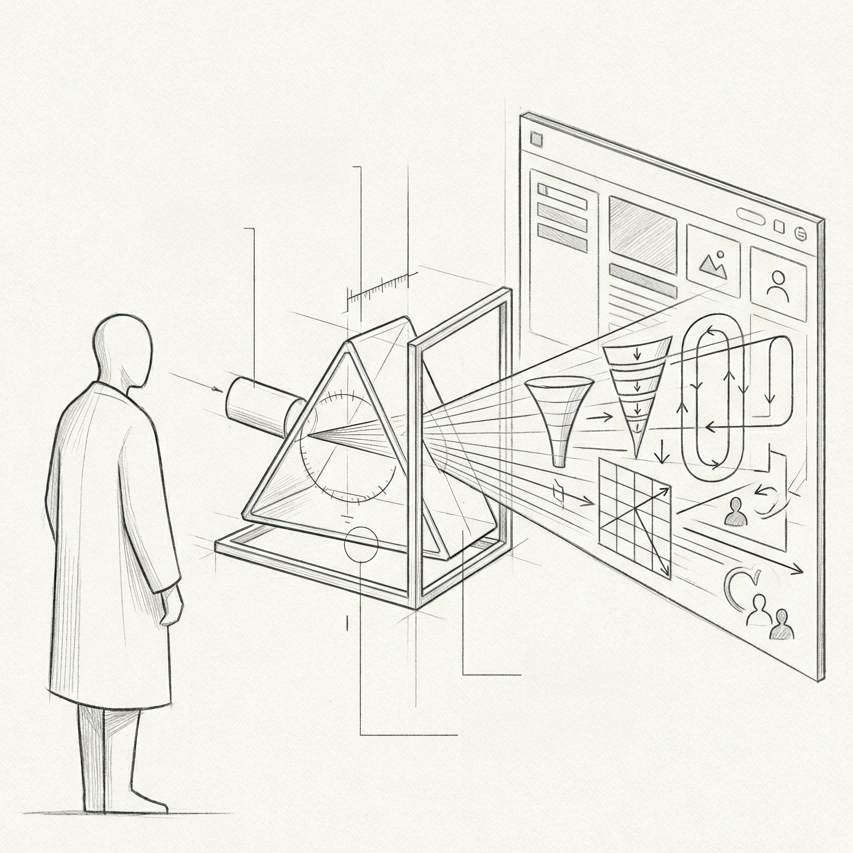 Making Indecent Persuasion Visible: How Evaluation Metrics Shape UX Designers’ Ethical ReasoningIn CHIWORK ’26: Proceedings of the 5th Annual Symposium on Human-Computer Interaction for Work (Late-Breaking Work), Linz, Austria, Jun 2026Best LBW Award Abstract: Making Indecent Persuasion Visible: How Evaluation Metrics Shape UX Designers’ Ethical Reasoning BibTeX: Making Indecent Persuasion Visible: How Evaluation Metrics Shape UX Designers’ Ethical Reasoning HTML: Making Indecent Persuasion Visible: How Evaluation Metrics Shape UX Designers’ Ethical Reasoning PDF: Making Indecent Persuasion Visible: How Evaluation Metrics Shape UX Designers’ Ethical Reasoning Poster: Making Indecent Persuasion Visible: How Evaluation Metrics Shape UX Designers’ Ethical ReasoningTLDR: In a study of 141 UX professionals, persuasion-focused evaluation metrics nearly doubled rejection of manipulative interfaces, surfacing "indecent persuasion" as a dimension standard UX instruments fail to capture.
 Towards Quantifying Ethical User Experience: Evaluating User Perceptions of Dark Patterns in Social MediaIn Mobilizing Research and Regulatory Action on Dark Patterns and Deceptive Design Practices Workshop at the CHI Conference on Human Factors in Computing Systems, Honolulu, Hawaii, USA, May 2024* = equal contributionAbstract: Towards Quantifying Ethical User Experience: Evaluating User Perceptions of Dark Patterns in Social Media BibTeX: Towards Quantifying Ethical User Experience: Evaluating User Perceptions of Dark Patterns in Social Media HTML: Towards Quantifying Ethical User Experience: Evaluating User Perceptions of Dark Patterns in Social Media PDF: Towards Quantifying Ethical User Experience: Evaluating User Perceptions of Dark Patterns in Social MediaTLDR: Only a modified User Experience Questionnaire can explicate unethical aspects of social media interfaces.