Bright Patterns
Defines the term and collects benevolent design solutions that put user goals and well-being first.
Dark patterns have a name, a taxonomy, and a regulatory audience. Their opposite did not. In a CHI ‘23 workshop paper (Sandhaus, 2023) I proposed bright patterns as benevolent design solutions that prioritize user goals and well-being, even where that works against a company’s short-term interest. Brightpatterns.org is the public front page for that term.
The site has three parts. A Hall of Fame of fourteen named patterns, such as Nutrition Label, Escape Hatch, Slow Down, and Usage Limits, each with a description and real examples. A Discoveries in the Wild section for patterns people spot in products. And a submission form, so the collection grows through nominations rather than only through my own reading.
The site also carries a citation block for people who use the term in papers or policy work. I update it when new submissions arrive and when my own work on UX evaluation metrics (Sandhaus et al., 2026) shifts how I think about the taxonomy.
References
2026
- CHIWORK LBW
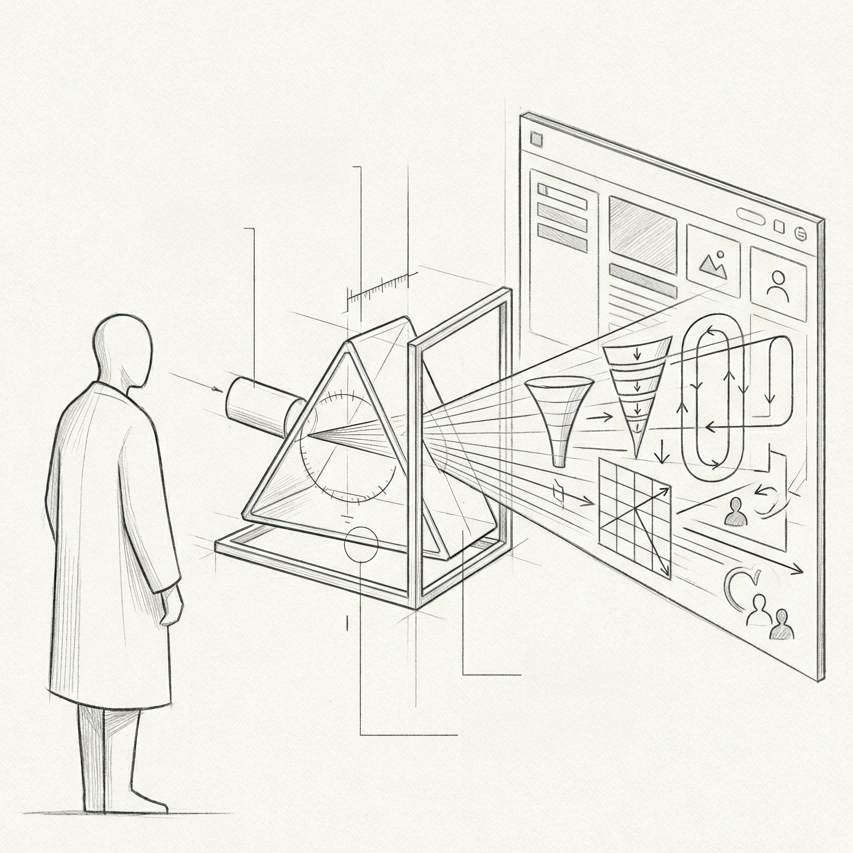 Making Indecent Persuasion Visible: How Evaluation Metrics Shape UX Designers’ Ethical ReasoningIn CHIWORK ’26: Proceedings of the 5th Annual Symposium on Human-Computer Interaction for Work (Late-Breaking Work), Linz, Austria, Jun 2026Best LBW Award Abstract: Making Indecent Persuasion Visible: How Evaluation Metrics Shape UX Designers’ Ethical Reasoning BibTeX: Making Indecent Persuasion Visible: How Evaluation Metrics Shape UX Designers’ Ethical Reasoning HTML: Making Indecent Persuasion Visible: How Evaluation Metrics Shape UX Designers’ Ethical Reasoning PDF: Making Indecent Persuasion Visible: How Evaluation Metrics Shape UX Designers’ Ethical Reasoning Poster: Making Indecent Persuasion Visible: How Evaluation Metrics Shape UX Designers’ Ethical ReasoningTLDR: In a study of 141 UX professionals, persuasion-focused evaluation metrics nearly doubled rejection of manipulative interfaces, surfacing "indecent persuasion" as a dimension standard UX instruments fail to capture.
2023
- CHI Workshop
 Promoting Bright PatternsIn CHI ’23 Workshop: Designing Technology and Policy Simultaneously, Hamburg, Germany, Apr 2023This paper started the brightpatterns.org websiteAbstract: Promoting Bright Patterns arXiv: Promoting Bright Patterns BibTeX: Promoting Bright Patterns HTML: Promoting Bright Patterns Website: Promoting Bright PatternsTLDR: The first definition of "bright patterns" is accompanied by examples that illustrate corporate use of persuasive design in support of user goals over their desires and business objectives.